Ryan Bills - Saxaphone Aiden Buck - Trumpet Leon Lewis-Nicol - Piano Sam Mösching - Guitar Jayden Richardson - Drums Jeremiah Hunt - Bass “K.I.M. (Keeping It Moving) is a genre-blending band led by Chicago bassist Jeremiah Hunt, fusing jazz, funk, soul, R&B, hip-hop, and more into a sound that’s fluid, bold, and deeply human. Whether it’s life, love, or the grind—K.I.M. is about pushing forward. With groove-driven performances and soul-charged compositions, this band isn’t just making music—they’re making motion.”
Julius Tucker is a pillar of Chicago’s jazz and creative music community—a pianist, composer, bandleader, and producer whose expansive artistry transcends genre boundaries. With a career spanning over 15 years, Tucker has solidified his reputation for masterful keyboard fluency, harmonic sophistication, and a multifaceted voice that moves effortlessly between jazz, improvised music, electronic experimentation, and beyond. Rooted in Chicago’s rich musical legacy, Tucker began his classical training at the Van Moody School of Music at age seven. He later honed his jazz sensibility at the Merit School of Music and Whitney Young Magnet High School, ultimately completing his academic journey at Northwestern University earning degrees in both Jazz Piano and Civil Engineering. Tucker is also a recipient of the Luminarts Cultrual Foundation’s Jazz Improvisation Fellowship and is an Artist in Residence at The Cliff Dwellers. A seasoned artist with international experience, Tucker has performed at legendary venues and world-renowned festivals, including The Green Mill, The Jazz Showcase, Sam First, and Red Light Cafe, the Chicago Jazz Festival, Hyde Park Jazz Festival, San Antonio’s Fiesta Jazz Fest, the Iowa City Jazz Festival, and Italy’s JazzIt Festival. Beyond performance, Tucker’s work as a producer and composer reflects a deep commitment to both jazz tradition and contemporary innovation. From intimate trio sessions to genre-blending electronic projects and compositions for film and television, his creative reach extends throughout Chicago’s vibrant music scene and beyond.
Miguel de la Cerna is a powerhouse pianist, arranger, and composer who bridges the soul of jazz with the pulse of innovation. A Chicago native and third-generation jazz artist, de la Cerna descends from musical royalty—his grandfather, General Morgan, recorded with Billie Holiday, and his aunt, Gloria Morgan, was a noted vocalist and recording artist. Following studies at the American Conservatory of Music and Oberlin Conservatory, de la Cerna toured internationally for over a decade as pianist and conductor. His genre-defying artistry spans continents, collaborating with creative icons like Kahil El’Zabar and Nicole Mitchell and orchestrating major productions such as Corey Wilkes’ Donny Hathaway and House Music tributes at Millennium Park. In theater and opera, he has brought fire and finesse to Regina Taylor’s Crowns and Exhibit, and served as featured pianist in South Shore Opera Company’s world premieres of Harriet Tubman and Fannie Lou Hamer. A two-time Orion Ensemble commission recipient and the 2022 Hyde Park Jazz Festival commissioned composer, his Three Children Songs for Left Hand is featured in the award- winning documentary For the Left Hand. As Music Director for the Jazz Institute of Chicago’s JazzCity concert series, de la Cerna continues to shape the city’s sound—anchored in tradition, driven by innovation.
A native of Louisville, Kentucky, saxophonist and educator Jarrard Harris attended the Youth Performing Arts School in high school and attended the University of Cincinnati College Conservatory of Music to further his jazz studies. At CCM he studied with Rick VanMatre, Pat Harbison, and Marc Fields. Upon Graduation from CCM Harris moved to Chicago in 1998 to further his studies at DePaul University where under the tutelage of Bob Lark, Tim Coffman, and Marc Colby he earned his master’s degree in jazz studies. Harris currently lives in Chicago, where he is on the jazz faculty of Northwestern University, Columbia College Chicago and the City Colleges of Chicago. He also serves as the director of jazz studies with the Chicago Public Schools Advanced Arts Education Program at Gallery 37. He maintains an active private teaching studio in addition to adjudicating and performing at college and high school festivals, giving master classes, and lecturing, he has performed with musicians in the United States and abroad. Jarrard was a founding board member of the Jazz education Network and serves as a current board member for the Jazz Institute of Chicago.
The Big Bari Band is big fun ! Where else do you get two bari saxes in one band? For the irrepressibly creative Chicago saxophonist Juli Wood, the only thing better than one big, rumbling baritone saxophone is, well, two of them. The front line features Wood and Chicago saxophonist Rajiv Halim on the two low horns. If you’ve ever heard either one of these musicians, you know that the two together playing baritone suggests considerable sound and energy. “I’ve always been a fan of Rajiv Halim’s playing on alto and tenor — he’s fantastic,” says Wood. “He’s just so soulful and very studied, though. He’s got so much harmonic knowledge, and his technique on saxophone is great. “Then I heard he bought a bari.” That’s all Wood needed to hear to begin conceiving the new band. For periodically she has picked up her baritone and has found audiences apparently eager to hear more.“Whenever I played at Room 43, there were always people who said: When are you going to bring that bari out?” says Wood, speculating they’re familiar with the “Movin’ and Groovin’” quintet recording she made in the 1990s with organist Mel Rhyne. That album, and a later one,”54321 Juli Wood” featured Wood playing baritone on some tracks, and lately she’d come to realize it was time for her to return seriously to the instrument.“The ballads are really mournful and beautiful,” she says. “The bari can be kind of airy and eerie-sounding if you play it softly, so we really use the (hushed) dynamics for the ballads. The baritone actually has a lot of coloring to it. It certainly can get loud and raucous. Some of these tunes we’re playing really fast, and we’ve really got to move it, as with ” The Cooker ” a George Benson tune. Double baritone repertoire is more rarefied, though Wood said she has drawn inspiration from Sun Ra’s 1950s “Sound of Joy” album, which featured Charles Davis and Pat Patrick on baritones. The work of prolific baritone player Ronnie Cuber also has been important to her.As for the Big Bari Band repertoire, Wood says she has arranged ballads such as Horace Silver’s “Peace” and McCoy Tyner’s “Search for Peace,” which “sound really beautiful with the two baris.” Thelonious Monk’s “Pannonica,” Silver’s “Enchantment” and the title cut of guitarist Grant Green’s “Matador” also have proved fruitful, says Wood, the latter because “it’s got a great bass jumping line that sounds really good with the bari picking that off.” – Howard Reich Chicago Tribune The Big Bari Band has been featured twice at the Chicago Jazz Fest and played at Andy’s Jazz Club and the Jazz Showcase.
Chicago-based pianist, composer, and bandleader Isaiah Jones Jr. brings a sound shaped by gospel and a deep respect for the jazz tradition. Originally from Milwaukee, Wisconsin, he continues to draw from his formative years in church, an influence that still shapes the way he listens, phrases, and connects in performance. Recognized as one of Chicago’s most in-demand young pianists, he maintains an active presence both nationally and internationally as a sideman and bandleader alike. He has collaborated with esteemed artists including Brian Lynch, Pharez Whitted, Derrick Gardner, Charles Heath, and others. He is currently completing his Master of Music in Jazz Studies at Northern Illinois University, where he serves as a graduate teaching assistant. He recently completed a piano trio album of primarily original compositions, produced by acclaimed Chicago guitarist Bobby Broom. His playing is melodic and lyrical, marked by a soothing touch and a natural sense of flow that draws listeners in. Grounded in tradition yet personal in expression, he approaches each performance with clarity, patience, and intention. His group, the Isaiah Jones Jr. Trio is a close-knit ensemble built on trust, deep listening, and shared intention. Rooted in friendship and a collective commitment to craft, the group is dedicated to creating meaningful musical experiences for everyone.
The Columbia College Jazz Ensemble directed by Scott Hall with Special Guest Philip Lassiter Featuring the Fusion Ensemble directed by Bill Boris (3/6 and 3/7) and the Latin Ensemble directed by Donald Neale (3/5 and 3/8) Lassiter's pedigree for top-tier compositions and arrangements and virtuosic trumpet playing have landed him gigs that include serving as Prince and New Power Generation’s horn arranger & section leader as well as credits working with Kirk Franklin, Ariana Grande, Timbaland, Roberta Flack, and more. 'Raw in Amsterdam' is an extension of his accolades as it showcases Lassiter as a frontman and songwriter in the brand-new 12-song collection. As an established fan favorite from Lassiter's 2021 studio release ‘Live in Love,’ "Repent," finds Bernarr putting a dazzling James Brown-esque personal touch on the lyrics originally recorded by mainstay LA vocalist Mackenzie. Filled with swaggering horn lines and energetic vocal chants, the tight-knit ensemble is displayed before launching into dexterous solos by Lassiter and Dulfer. Bernarr is hot off the heels of an NPR Tiny Desk Performance and was named as one of 2019’s “Artists to Know” by Billboard. His loud and proud stage presence complements Lassiter’s composition and arrangement abilities allowing both him and guest saxophonist Candy Dulfer to shine throughout the funk-fueled powerhouse of a track. Lassiter enlists fellow Prince collaborator Candy Dulfer in the aptly titled tribute, “Purple.” Lassiter first connected with Prince in 2010 when he auditioned to be his horn arranger/section leader and landed the gig performing with New Power Generation. Like many of the late genre-defying master’s collaborators, Lassiter was inspired by Prince’s work ethic and dedication to experimentation. With its Prince-like driving quarter note groove and syncopated guitar and bass line, Lassiter helms a 15-piece ensemble in the live recording that embodies the spirit of Prince. The punctuated, shout-like horn melodies trade with layered vocal harmonies before an asserted horn soli launches into rounds of deliberate solos performed by Jordy Kalfsvel on keyboards, Lassiter on trumpet, and capped off with a powerful, extended solo by Dulfer on alto saxophone. Though Lassiter and Dulfer never performed with Prince at the same time (she was in his band during the 2003-2005 Musicology era), the two connected when Lassiter relocated to The Netherlands two years ago and have been collaborating together ever since. "Bump the Man" originally appeared on Lassiter's 2018 Party Crashers album. It's laced with a “fight the power” message that points to hope and a positive mindset. It features blazing horns and soulful and another showstopping vocal appearance from Durand Bernarr as well as an unexpected Latin twist coming out metamorphic pre-chorus that nod to the Beatles’ psychedelic era. Dutch percussion legend Martin Verdonk is also featured throughout the track
Julia Danielle is a dynamic vocalist, arranger, educator, and composer making her mark in the vibrant jazz scenes of Chicago and New York. A 2022 International Ella Fitzgerald Jazz Vocal Competition winner, Julia earned widespread acclaim performing alongside The Tierney Sutton Band at Washington D.C.'s renowned Blues Alley Jazz Club, where she has since headlined her own shows. Her debut album, Julia Danielle, released in November 2024, garnered praise as “a fresh voice” with “a folksy wisp that floats with a bohemian glide” (Jazz Weekly). Julia has collaborated with celebrated artists, including Ben Paterson, Clark Sommers, Dennis Carroll, Kris Funn, Dana Hall, Ernie Adams, George Fludas, Jeremy Kahn, Lenard Simpson, Geof Bradfield, Chris Madsen, Sharel Cassity, Brandon Woody, and Isaiah Collier. She is also a 2024 Luminarts Winner and was named DownBeat Magazine's "Outstanding Vocal Soloist" in its 46th annual Student Music Awards, featured in the publication's June 2023 issue. Currently pursuing a Master of Music in Jazz Studies at The Juilliard School, Julia is mentored by world-renowned artists Charenee Wade, Marc Cary, Gerald Cannon, Kenny Washington, Isaiah J. Thompson, and Donald Vega. Her studies continue to refine her artistry and shape her distinctive voice in vocal interpretation, composition, and improvisation. Julia has performed at esteemed venues and festivals, including Chris' Jazz Café, Blues Alley Jazz Club, Winter's Jazz Club, The Jazz Showcase, Andy's Jazz Club, Room 623, Bop Stop, Merriman’s Playhouse, The Logan Square Arts Festival, The Hyde Park Jazz Festival, and The Winnetka Music Festival.
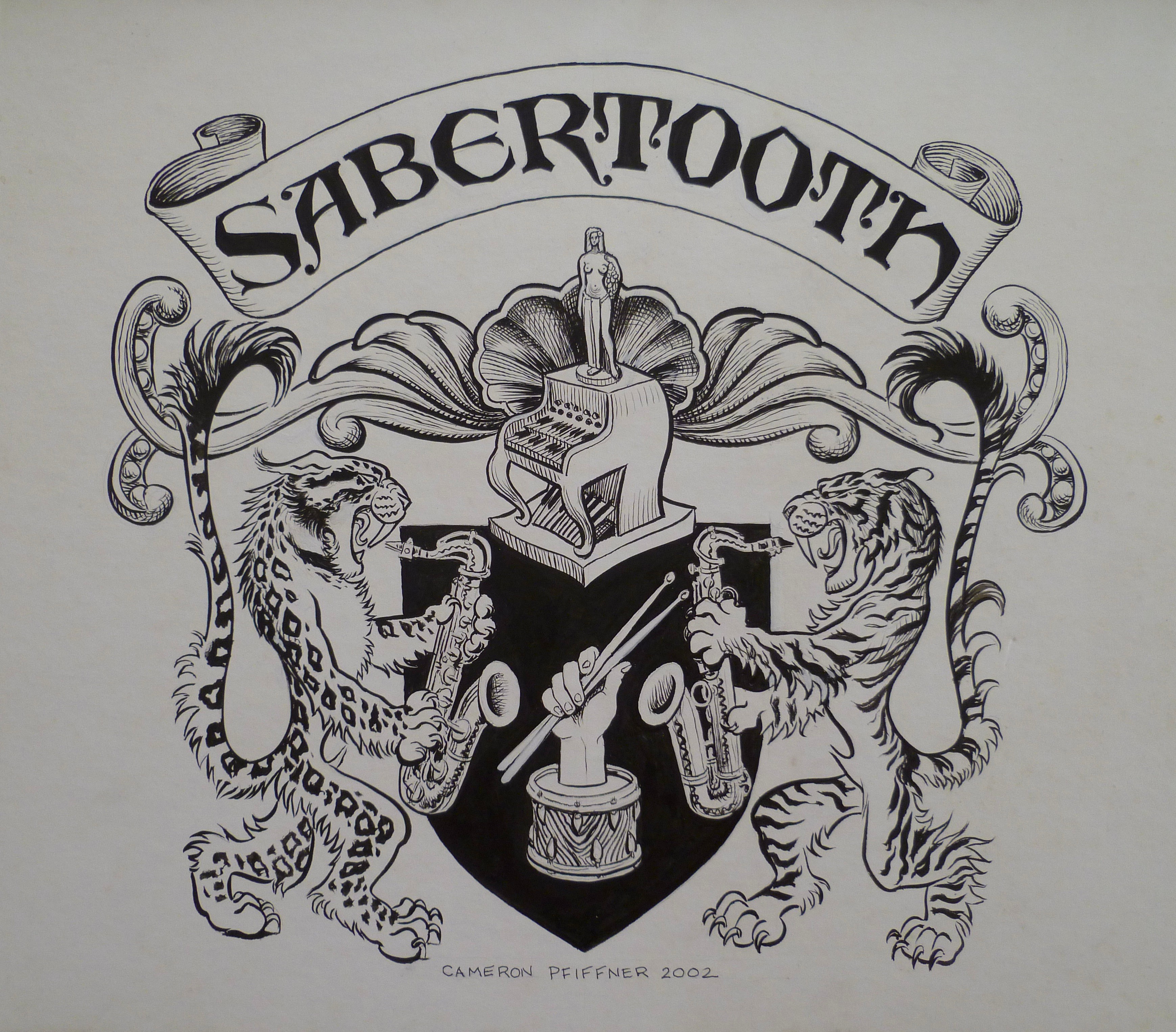
Cameron Pfiffner/ Saxophones and Flute Pat Mallinger / Saxophones Pete Benson / Organ Neil Hemphill/ Drums Founded around 1990, Sabertooth is led by two saxophonists: Cameron Pfiffner & Pat Mallinger. The band started out with the unique pairing of its two lead reedmen at an old musicians hang called Jazz Bulls in Lincoln Park West neighborhood of Chicago. From that night’s collaboration the idea of Sabertooth began to take shape with a driving force behind the widely varied stylings best summed up as, “just groove it”. Sabertooth has often ventured beyond soul-jazz and hard bop and moved into post-bop and modal territory with John Coltrane’s modal recordings of the early to mid-’60s influencing the groups sound. Sabertooth is both a post-bop group and a soul-jazz/hard bop group with a highly diverse repertoire that includes many original compositions and jazz classics by Duke Ellington, Horace Silver, Wayne Shorter, Lester Young, John Coltrane, as well as covers by the Beatles, Grateful Dead, Bob Dylan, Allman Brothers, Lynyrd Skynyrd, and Bob Marley. Special invited guests who have performed with Sabertooth have included Harry Conick Jr., Kurt Elling, Joe Lovano, Roy Hargrove, Wynton Marsalis Band, Jack McDuff, Joey DeFrancesco, Umphrey’s Mcgee Band, and many others. Sabertooth has also performed for numerous jazz festivals, concerts and private engagements.
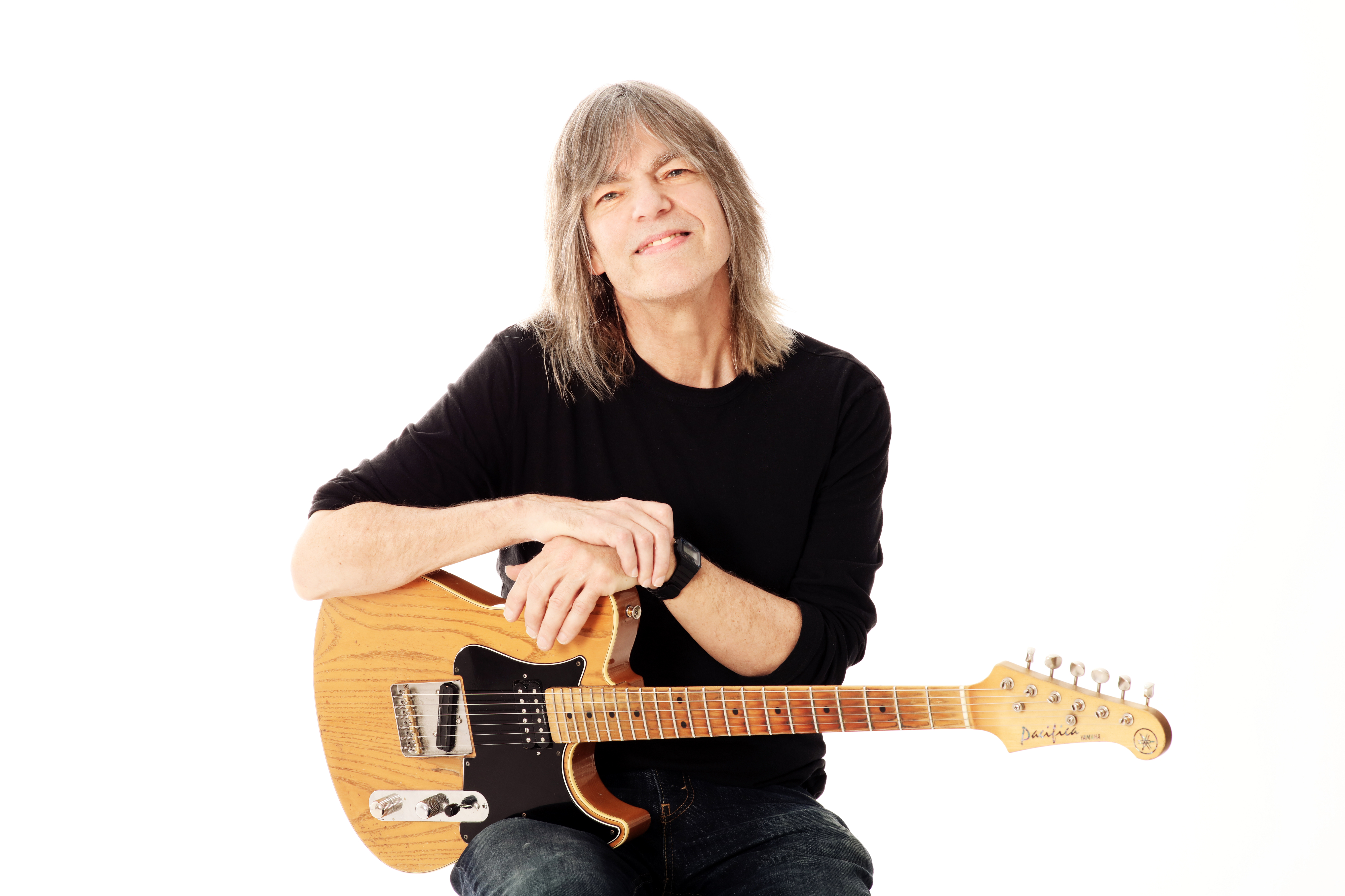
Diego Hedez, a gifted trumpeter born in Cuba and now based in New York, embodies a dynamic spirit in contemporary jazz and improvised music. Diego's musical journey includes collaborations with avant-garde icons like William Parker , David Virelles , Francisco Mela and Daniel Carter, and performances at notable venues and festivals globally like The Kennedy Center, Jazz at Lincoln Center, Roulette Intermedium, Bric Festival, Forward Festival , Winter Jazz festival among others. His recent projects, including "The Forward Quartet" and collaborations with David Virelles and the Singer’s Grove, showcase his commitment to pushing musical boundaries through free improvisation , traditional Cuban music and sonic exploration.
Petra's Recession Seven: Petra van Nuis - vocals Art Davis - trumpet Eric Schneider - reeds Russ Phillips - trombone Andy Brown - guitar Dan DeLorenzo - bass Bob Rummage - drums At the start of the Great Recession in September 2008, Petra's Recession Seven, an authentic Chicago-style jazz band was born at Chicago's legendary Green Mill. The seven piece ensemble is led by Petra van Nuis, a vocalist praised by the Chicago Tribune for her "interpretive savvy...light-and-silvery vocals and, better still, saucy manner of delivery that emphasizes the art of the double entendre." Petra's Recession Seven features a front line of all-star internationally known Chicago veteran horn players. Trombonist Russ Phillips grew up "in the wings" listening to his dad, Russ Phillips Sr. play trombone in Louis Armstrong's All-Stars. Russ Jr. decided to follow in his dad's footsteps, and in addition to Chicago performances is a popular fixture on mainstream jazz festivals and cruises. Reedist Eric Schneider began his early career as a member of the bands of Count Basie and Earl Fatha Hines. Since then, Eric has played with many legends including Benny Goodman, Tony Bennett, Dizzy Gillespie and Ella Fitzgerald and continues to be one of the busiest working musicians in Chicago. Trumpeter Art Davis is charter member of the Chicago Jazz Orchestra and a highly respected jazz educator. Early in his career, Art toured with Ray Charles, Frank Sinatra and Rosemary Clooney and continues to be the top call trumpeter for musicians touring through Chicago. The swinging rhythm section of bassist Dan Delorenzo and drummer Bob Rummage is led by guitarist Andy Brown, recognized in Downbeat Magazine's annual critics poll as a “rising star.” In their hometown of Chicago, Petra's Recession Seven is a big hit at the Jazz Showcase, the Green Mill, Andy's Jazz Club, Winter's Jazz Club and Fitzgerald's. Festival performances include the Chicago Jazz Festival, the Cedar Basin Jazz Festival, the Juvae Jazz Festival and the American Music Festival. Regionally, the Recession Seven has played jazz societies including the Madison Jazz Society, the Starr-Gennett Foundation, the Illiana Jazz Club, the "Masters of Swing" series at Cincinnati's Xavier University, the Lafayette Jazz Club and the Indianapolis Jazz Club. The American Rag, in a review of the band's 2011 on location recording "Live In Chicago" praises “a killer of a band that grabs your attention and doesn't give it back until they are finished playing." www.petrasings.com
”Clark Sommers rings true and honest in tone. The golden color pours a solid foundation to the timber of the group.” – All About Jazz. Bassist, Composer and Educator, Clark has toured and performed extensively throughout the world. He has had the privilege of performing with Cedar Walton, Darrell Grant, Brian Blade, Ernie Watts, Bennie Maupin, Von Freeman, Ira Sullivan, Frank Wess, Charles McPherson, Peter Bernstein, Lin Haliday, Dana Hall, Jodie Christian, Bobby Broom, Jeff Parker, Ron Perrillo, Geof Bradfield, Michael Weiss, George Fludas, Kevin Mahogany, Eden Atwood, Ted Sirota’s Rebel Souls, The Chicago Jazz Orchestra among others. Clark completed his undergraduate degree in Jazz Studies and World Music at California Institute of the Arts in 2002, where he studied with bass masters Charlie Haden and Darek Oles. While living in Los Angeles, Clark performed with Leo Smith, Vinny Golia, The Charlie Haden Liberation Orchestra, Joe La Barbara and Larry Koonse. Additionally, Clark completed a masters degree in Jazz Composition in 2021 from DePaul University. Clark is proud to be at home in the bass chair with vocalist Kurt Elling, with whom he tours the globe, bringing jazz to everyone from Istanbul to the Canary Islands. Thus far, he has been privileged to play on multiple recordings with the Elling. One of which won the GRAMMY for best jazz vocal album in 2009 “Dedicated to You” Kurt Elling sings the music of Coltrane and Hartman and the second in 2020 for “Secrets Are The Best Stories” featuring Danilo Perez When not on the road with Kurt Elling, Clark enjoys leading two of his own groups in and outside of Chicago. Ba(SH) which includes long-time collaborators Dana Hall on drums and Geof Bradfield on reeds released their debut album in 2013 which was acknowledged on the “notable and not to be missed” list by All About Jazz in 2013. The groups’ subsequent album “Peninsula” was released in 2020. The Lens Project “By A Thread” was released in 2014 and includes Jeff Parker, Kendrick Scott, Gary Versace, Geof Bradfield and Joel Adams. The latest Lens album was released in the Fall of 2022 and features Dana Hall, Chris Madsen, Matt Gold and Geof Bradfield. Clark can also be heard performing with Portland’s Darrell Grant in his “Territory” and “Step By Step” ensembles which include Brian Blade, Joe Locke and Steve Wilson. Other groups that Clark performs regularly with include Dana Hall’s “Spring” and “Black Fire,” Geof Bradfield’s “African Flowers Ensemble” and “Melba, Our Roots”, The Chicago Yestet and many other musicians.
Antonio Hart - saxophoneRichard Johnson - pianoAlex Apolo Ayala - bassJerome Jennings - drums When Antonio Hart was in ninth grade, the music and art programs were cut out of the public schools. Antonio was devastated because the one thing that made school enjoyable was taken away from him. Hart had a friend that attended the then-new Baltimore School for the Performing Arts and somehow got Antonio an audition. Most of the students that attended this school had been playing music all of their lives and had private instruction. This did not stop Antonio because he knew this would be the place for him. The night before the audition, Antonio spent hours on the phone with his friend learning a song from one of his music books. He did the best he could because he really could not read the level of music he was trying to play. The school was a hotel that had been made into one of the best learning institutions in the country. Hart was taken to a room to warm up, and then three teachers came in for the audition. He played his piece ‘Hungarian Dance #5’, then he played some scales for them. The teachers said thank you and that was it. Hart prayed every day, but he did not think he would get in. One week to the day, he received a transfer letter in the mail; he had been accepted! Hart considers this the beginning of his life as a young man and musician. This was such a change for Hart because this was a very serious school. The academics were hard and the music courses were very challenging. Hart found himself in summer school because he did not cut it that first year, but that was the only summer he went to summer school. After that adjustment period, Hart started to grow very fast. He gives much credit to his private teacher Chris Ford. ‘Mr. Ford took me from the beginning to a level much higher than the average high school student.’ At school, Hart played a lot of classical music but started to like Jazz. He felt more connected with Jazz because of the people he saw playing it and the chance to improvise. Hart’s actual study of Jazz began at the Berklee College of Music in Boston. There, he studied with Bill Pierce, Andy McGhee, and Joe Viola. The three teachers gave him the foundation he needed to develop into a professional musician. Hart spent many hours in the library listening to all his favorite musicians and practicing and playing as much as possible. There were also many late hours in the practice room. Because of the lessons learned at the School for the Arts, Hart really thought it was essential to have a balance between music and academia, so in his sophomore year, he became a Music Education Major. These courses added other challenges that inspired Hart. He made many friends at Berklee, but the most important was Roy Hargrove. They spent three years touring the world and recording Hargrove’s first three records. Hart considers Hargrove to be his brother in life and music. He even used Hargrove’s first recording ‘For the First Time.’ Hart wanted to continue his education and study from some true masters of Jazz, so during those first few years on the road, he also worked on a Masters’s Degree at Queens College. There he had the opportunity to learn from the great Jimmy Heath and Donald Byrd. Hart felt blessed and honored when Mr. Heath produced his second recording, ‘Don’t You Know I Care.’ His 1997 release, ‘Here I Stand’ Impulse records, earned Hart a 1997 Grammy nomination for ‘Best Jazz Instrumental Solo.’ He has also been in much demand as a guest on over 100 recordings. Since then, Hart has recorded eight CDs as a leader. The latest, ‘Blessings” JLP Jazz Legacy productions. Hart balances his time as a full-time tenured Professor at The Aaron Copland School of Music, Queens College, as well as traveling on the road with his band, The Dave Holland Big band and The Dizzy Gillespie Big band. In his off time, he likes to practice martial arts. And listen to other styles of music for inspiration. He is constantly trying to get to higher levels on his horn and in his writing.
Mark Feldman - violin Steve Million - piano Eric Hochberg - bass Bob Rummage - drums In 1988, Steve Million was a semifinalist in the internationally renowned Thelonious Monk Piano Competition; that same year, the Missouri native moved to Chicago and never looked back. The music of Monk continued to play an important role in his career. In the 90s he formed a two-keyboard band called Monk’s Dream with Mike Kocour and Robert Shy; in the 2000s created the humor-filled band Thelonious Moog with Joe "Guido" Welsh; and is now part of a piano duo with esteemed pianist Jeremy Kahn called Double Monk that performs the music of Monk with their arrangements and sometimes with the modern dancer Ariane Dolan. Around 2004 Million began a rewarding career teaching privately at the respected Merit School of Music, where he is now Jazz Chair, runs classes in jazz piano, jazz ensembles, and improvisation. In addition to playing his regular nightly gig at the popular downtown restaurant Catch 35. Million has recorded three CDs for Palmetto Records: Million to One (1995), Thanks A Million (1997), and Truth Is (1999) featuring such artists as trumpet great Randy Brecker, saxists Chris Potter and Dick Oatts, and legendary bassist Michael Moore. He has also released a trio album, Poetic Necessities (BluJazz, 2002), and a solo album, Remembering The Way Home (Origin, 2008).